

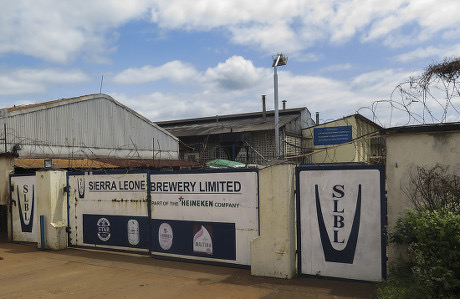
The Deputy Leader of Government Business, Hon. Bashiru Silikie, has singled out Sierra Leone Brewery Limited as an example of what he described as Parliament's failure to adequately monitor investment agreements, calling for a comprehensive investigation into concession deals approved over the years.
Speaking in Parliament on Tuesday, 4 August 2026, during debate on a new investment agreement, Hon. Silikie argued that Sierra Leone cannot afford to repeat what he said happened under the Sierra Leone Brewery Limited concession, where Parliament approved generous tax incentives based on promises of local industrial production and economic transformation.
According to Hon. Silikie, Members of Parliament were assured that Sierra Leone Brewery Limited would establish local manufacturing capable of reducing reliance on imported alcoholic beverages, creating jobs, adding value to local production and contributing to industrial development.
He said Parliament was further informed that increasing import duties on foreign alcoholic drinks would not be necessary because local manufacturing would eventually satisfy domestic demand. However, Hon. Silikie claimed those expectations were not realised, alleging that imported alcoholic beverages later dominated the market while the anticipated industrial benefits failed to materialise.
"The lesson is that Parliament should not only ratify agreements but also monitor their implementation," Hon. Silikie told lawmakers. "If we fail to follow up, companies may enjoy concessions without delivering the economic transformation that justified those incentives."
He argued that the Sierra Leone Brewery experience demonstrates why Parliament must strengthen oversight of investors granted tax exemptions and duty waivers to ensure they fulfil commitments relating to local manufacturing, employment creation, technology transfer and value addition.
Hon. Silikie proposed the establishment of a Special Select Committee or the assignment of an existing parliamentary oversight committee—to investigate all investment agreements previously ratified by Parliament. He said the review should determine whether beneficiary companies have honoured their contractual obligations and whether Sierra Leone has received value for the incentives granted.
"Let us investigate every agreement approved by this Parliament," he urged. "Companies complying with their obligations should be supported, but those failing to honour their commitments must be held accountable."
He further warned against investors using concession agreements primarily to import finished products instead of establishing local industries, arguing that such practices undermine the purpose of investment incentives and deprive Sierra Leoneans of the jobs and economic opportunities they were promised.
According to Hon. Silikie, investment incentives should produce visible outcomes, including functioning factories, sustainable employment, increased domestic production, competitive prices and products proudly bearing the label "Made in Sierra Leone."
Drawing comparisons with neighbouring countries, he pointed to Ghana as an example where locally manufactured products compete successfully with imports, demonstrating what effective industrial policy can achieve.
He also stressed that tax holidays should not become permanent privileges, insisting that investors benefiting from concessions must eventually contribute taxes to the national treasury once their incentive periods expire.
While reaffirming the importance of investment incentives in attracting foreign direct investment, Hon. Silikie maintained that such concessions must be linked to measurable performance indicators, including production targets, employment creation, quality standards and long-term tax compliance.
His remarks have reignited debate over the effectiveness of Sierra Leone's investment incentive regime and intensified calls for Parliament to scrutinise concession agreements to ensure investors deliver on the commitments made in exchange for public support.
Hon. Silikie's comments regarding Sierra Leone Brewery Limited reflect his position during the parliamentary debate and form part of his broader call for a formal parliamentary investigation into past investment agreements. Any findings on whether specific companies complied with their contractual obligations would ultimately depend on the outcome of such an investigation.
Response from Sierra Leone Brewery Limited (SLBL)
We have reviewed your proposed article and wish to respectfully clarify a number of issues to ensure accuracy and balance.
According to Public Relations Officer, at Sierra Leone Brewey Limited, Unisa said the legislative measures and fiscal policies enacted by the Government of Sierra Leone and approved by Parliament were not designed for Sierra Leone Brewery Limited alone, instead were introduced as part of broader national economic and industrial policies aimed at promoting and protecting local manufacturing, encouraging value addition, attracting foreign direct investment, creating employment, reducing dependence on imports, and advancing Sierra Leone’s Local Content agenda.
He said SLBL has consistently supported these national objectives and remains one of the country’s leading manufacturing companies. Over the years, the company has made significant contributions to Sierra Leone through.
He said SLBL has created thousands of direct and indirect employment opportunities, making substantial tax contributions through multiple revenue streams and also supporting the local agricultural value chain by sourcing raw materials from Sierra Leonean farmers.
According to him, it is therefore inaccurate to suggest or imply that the policy objectives behind the Finance Acts or investment incentives were intended solely to benefit SLBL or that their success or failure should be measured against one company.
The Finance Act, he noted is reviewed annually as part of Government’s fiscal and economic management framework, stressing that such legislation should not be interpreted as a one-off measure against which the performance of local manufacturers is judged. Rather, it forms part of a continuing national strategy to strengthen domestic industry, improve competitiveness and stimulate sustainable economic growth.
"We agree that Parliament has an important oversight role and welcome any objective review of investment agreements and incentive regimes. However, such reviews should be evidence-based, balanced and should acknowledge the significant contributions made by companies that continue to invest in Sierra Leone,"Unisa explained.
"SLBL believes that strengthening and protecting local manufacturing remains in the best interest of Sierra Leone. A vibrant manufacturing sector creates jobs, supports farmers and local suppliers, expands the tax base, reduces import dependence and contributes meaningfully to long-term national development. We therefore encourage continued policy support for local manufacturing industries, as their success directly translates into greater economic opportunities and lasting benefits for the people of Sierra Leone," he concluded.