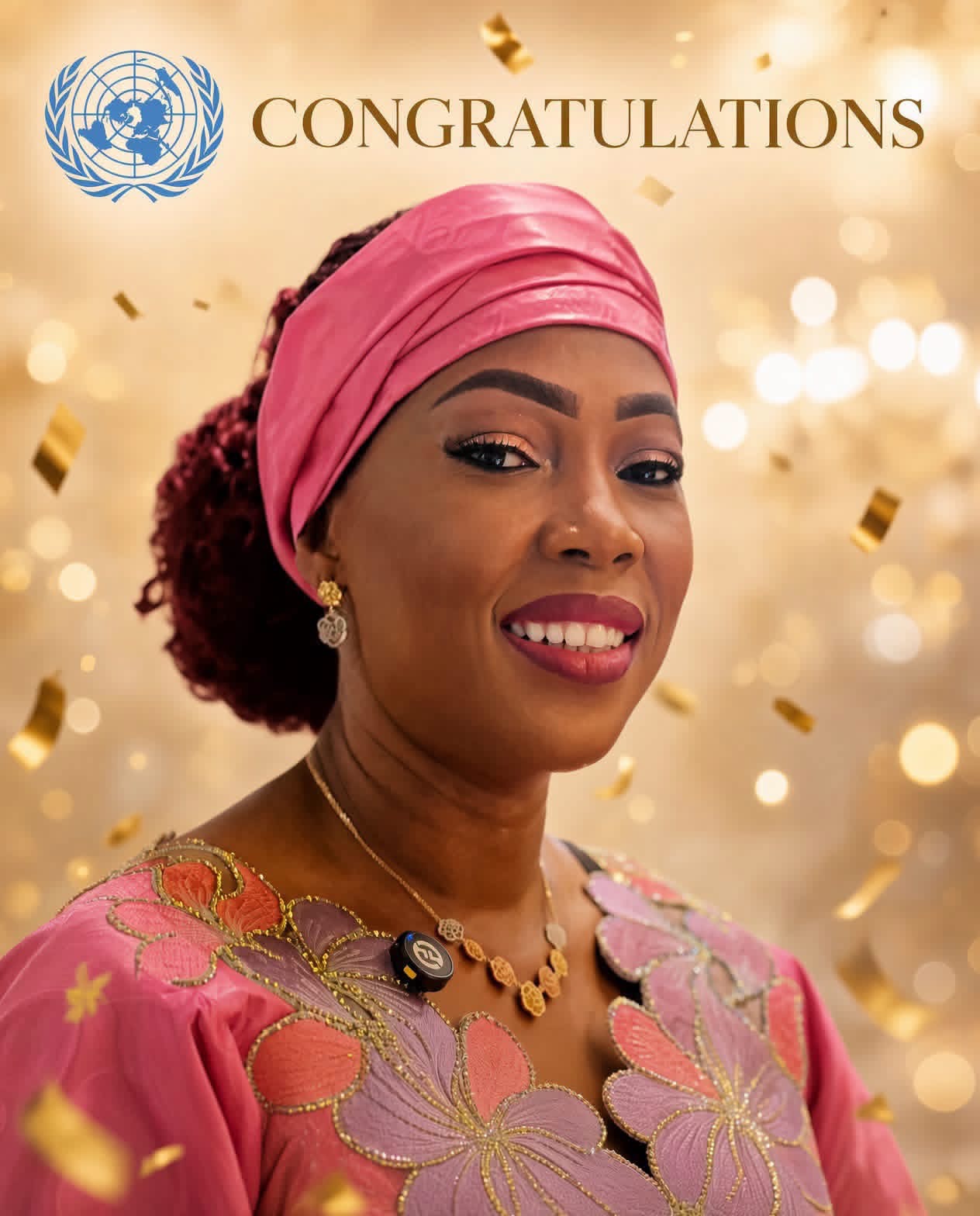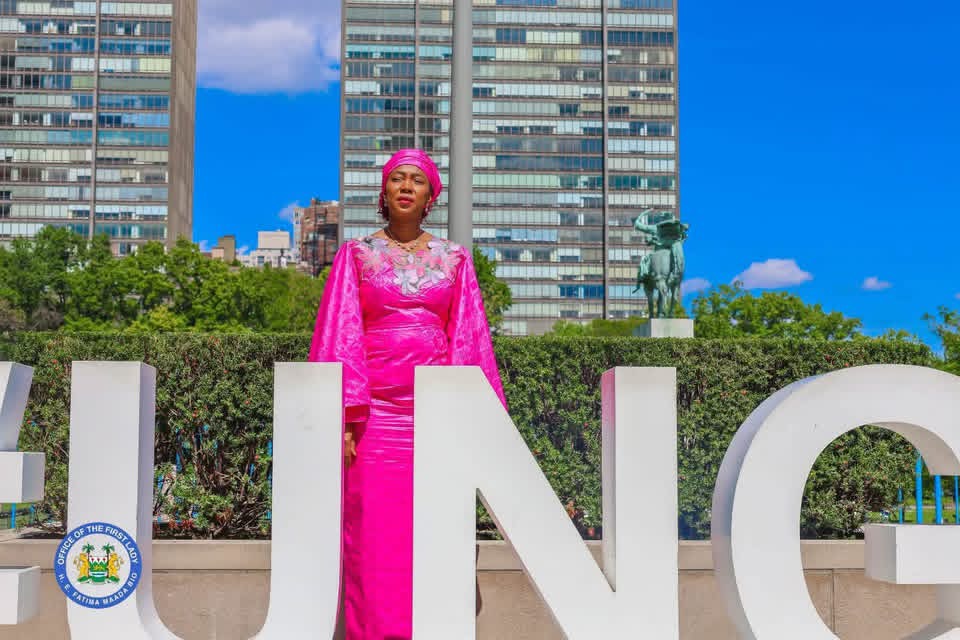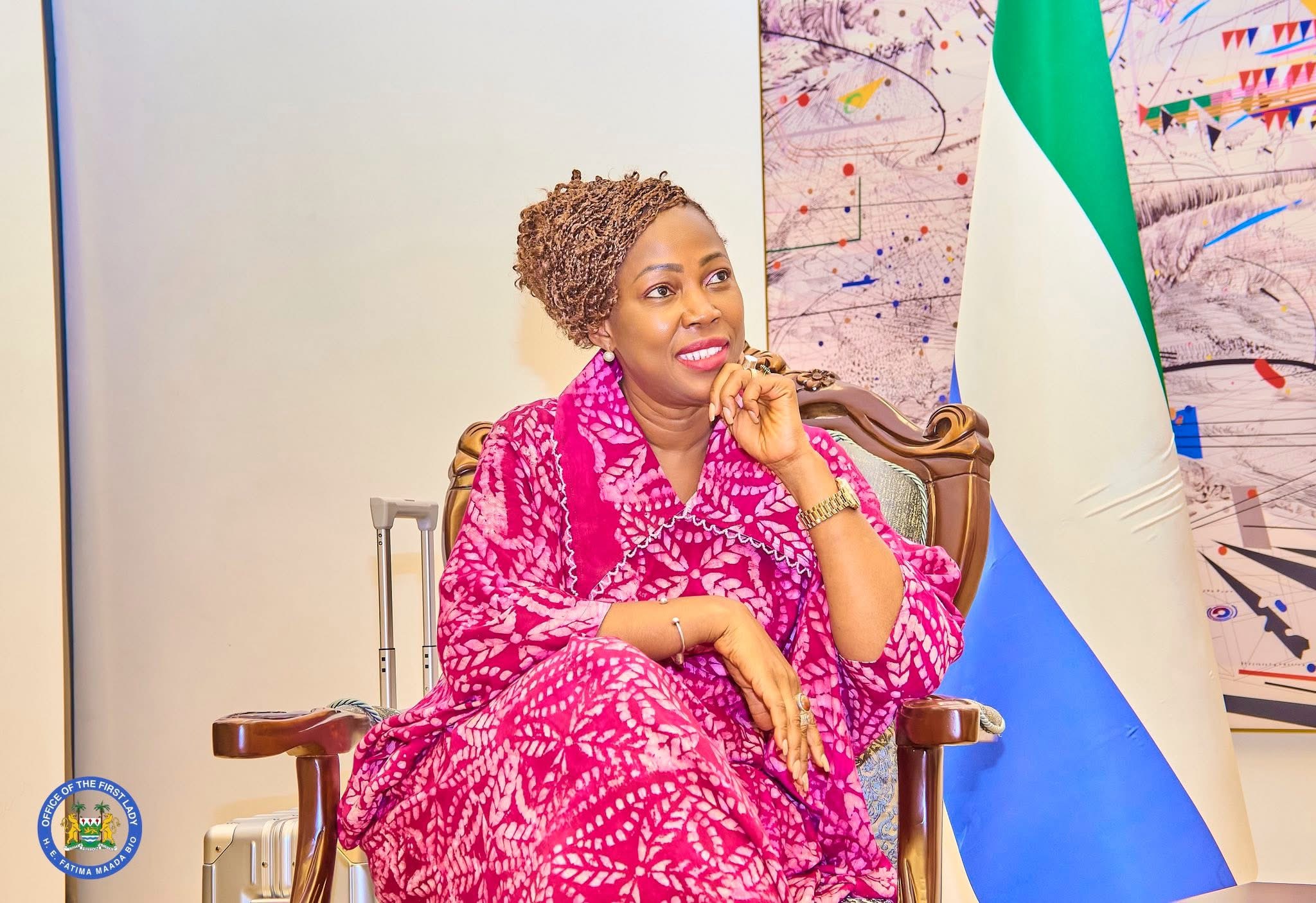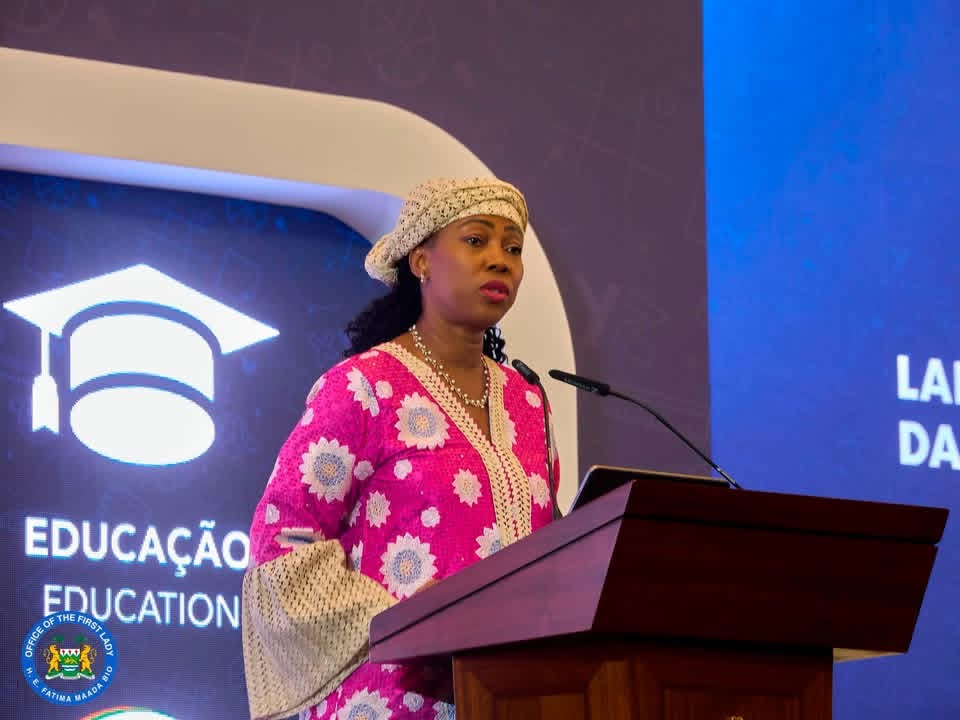


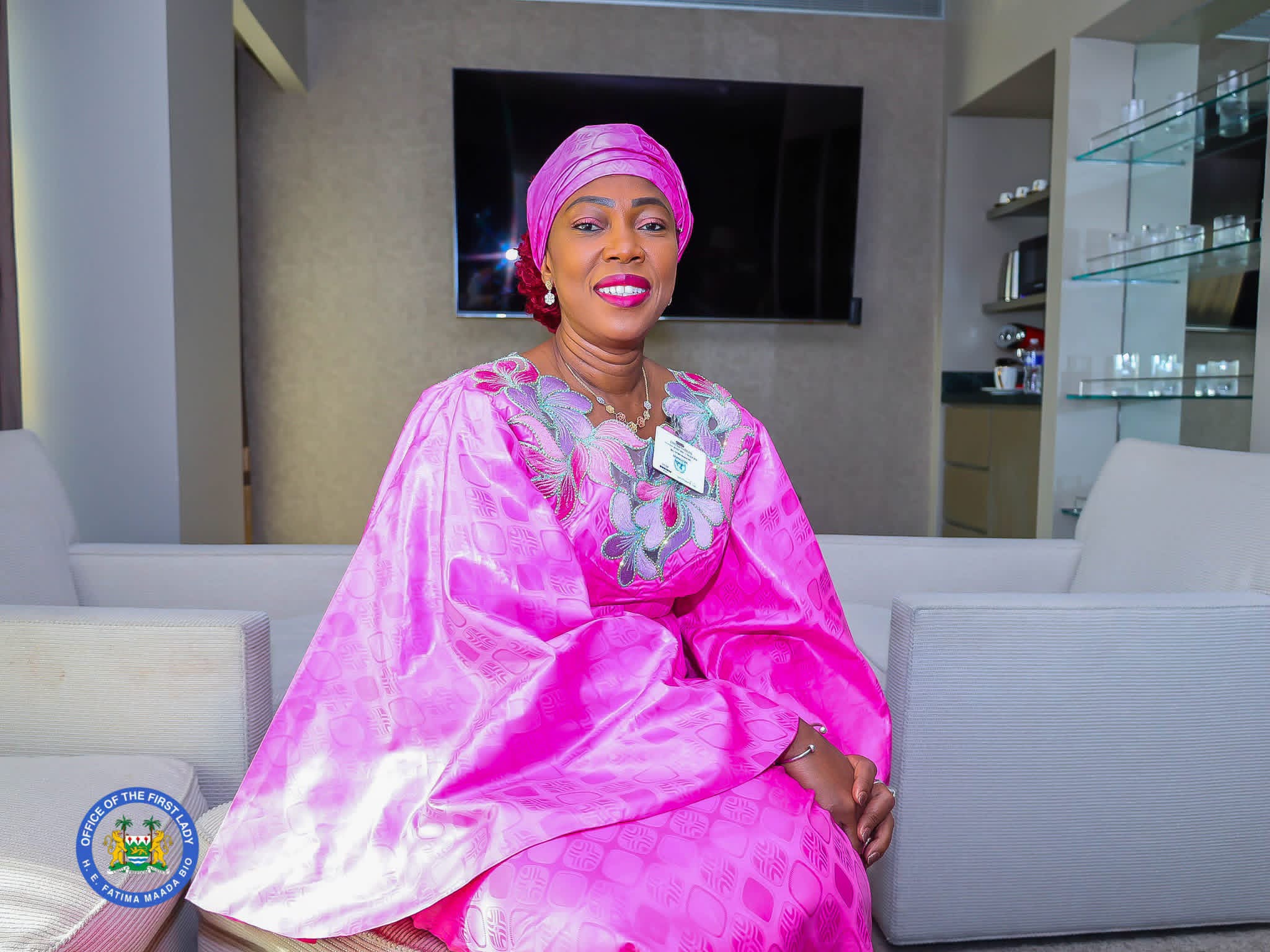
Sierra Leone’s First Lady, Dr. Fatima Maada Bio, has taken her campaign against child, early and forced marriage to the international stage, using her engagement at the United Nations General Assembly to renew calls for stronger global action to protect girls and safeguard their future.
Speaking about the devastating impact of early and forced marriage, Dr. Bio drew on her own experience and called for greater commitment to ensuring that girls are protected from being forced into marriage before they are ready.
“Early marriage is a journey I know from my own life experience, one which I was fortunate to survive,” Dr. Bio said, according to a message published by her Hands Off Our Girls Foundation.
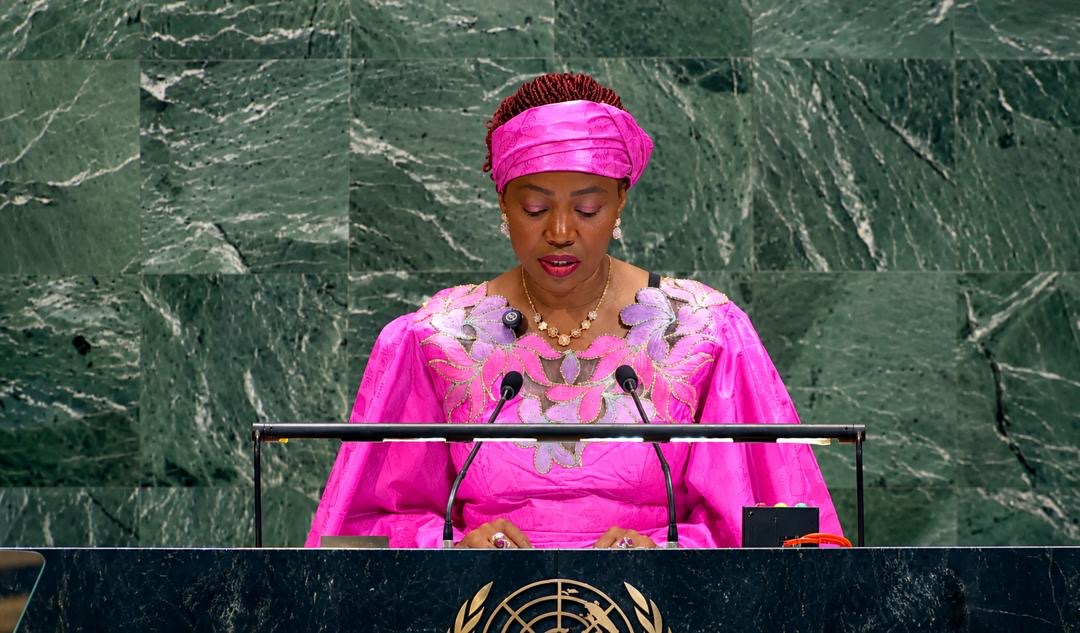
She added: “Today, with my voice, I carry the hopes of millions of children, so that the girl child may be spared what so many have endured.”
Her personal testimony has added a powerful human dimension to her advocacy, which has increasingly focused on ending child marriage and protecting the rights and dignity of girls.
Through the Hands Off Our Girls initiative, Dr. Bio has consistently advocated for stronger measures to protect girls from practices that can deprive them of education, economic opportunities and the freedom to make decisions about their own lives.
In another message linked to her UN General Assembly engagement, she highlighted the broader consequences of forcing girls into marriage.
“When a girl is forced into marriage, we do not only take away her childhood we take away her choices, her opportunities and, too often, the future she could have helped build,” she said.
Child marriage can interrupt a girl’s education, restrict her economic prospects and expose her to responsibilities and circumstances for which she may not be physically, emotionally or financially prepared.
For Dr. Bio, ending child marriage must therefore go beyond preventing individual marriages. She has argued that societies must create an environment where girls can remain in school, develop their talents and participate meaningfully in the development of their families, communities and countries.
“Ending child marriage is not only a human rights imperative. It is an investment in human potential, families, economies, communities…” another statement attributed to the First Lady reads.
Her advocacy comes as Sierra Leone continues efforts to strengthen the protection of children and promote the rights and welfare of the girl child.
By taking the issue to an international audience, Dr. Bio is seeking to broaden the conversation beyond Sierra Leone, calling for stronger international cooperation, political commitment and sustained action to address practices that undermine the rights and potential of girls.
The Hands Off Our Girls campaign has become a prominent platform for raising awareness about issues affecting girls and women, including sexual violence, teenage pregnancy and child marriage.
Dr. Bio’s engagement at the United Nations also provides Sierra Leone with an opportunity to project its advocacy on a global platform while drawing attention to the experiences of girls who remain at risk of losing their childhood, education and ability to determine their own futures.
Child marriage is often influenced by a combination of factors, including poverty, social pressure, traditional practices and limited access to education and economic opportunities. Tackling the problem therefore requires more than legislation. It demands sustained community engagement, education, effective enforcement of laws and greater support for vulnerable families.
The First Lady’s appeal consequently places responsibility on governments, communities, parents and international partners to ensure that girls are protected and given the opportunity to reach their full potential.
For Dr. Bio, the fight against child marriage is ultimately about ensuring that the next generation of girls does not have to endure experiences that have affected millions before them.
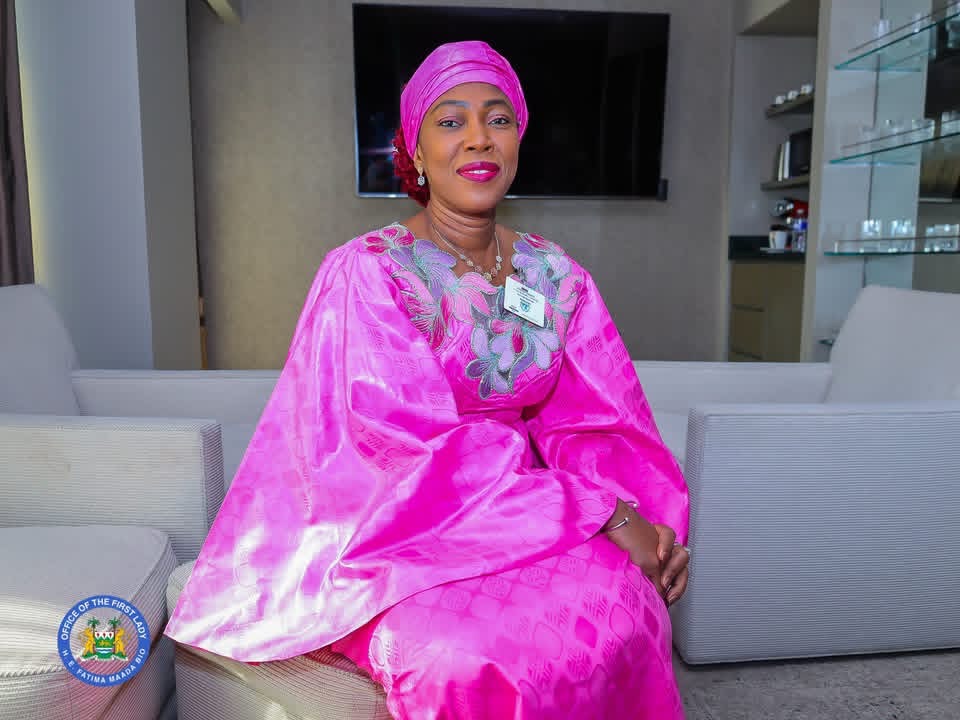
Her message from the UN is therefore both a personal testimony and a broader call for collective action: protect the girl child, preserve her choices and give her the opportunity to shape the future she deserves.